
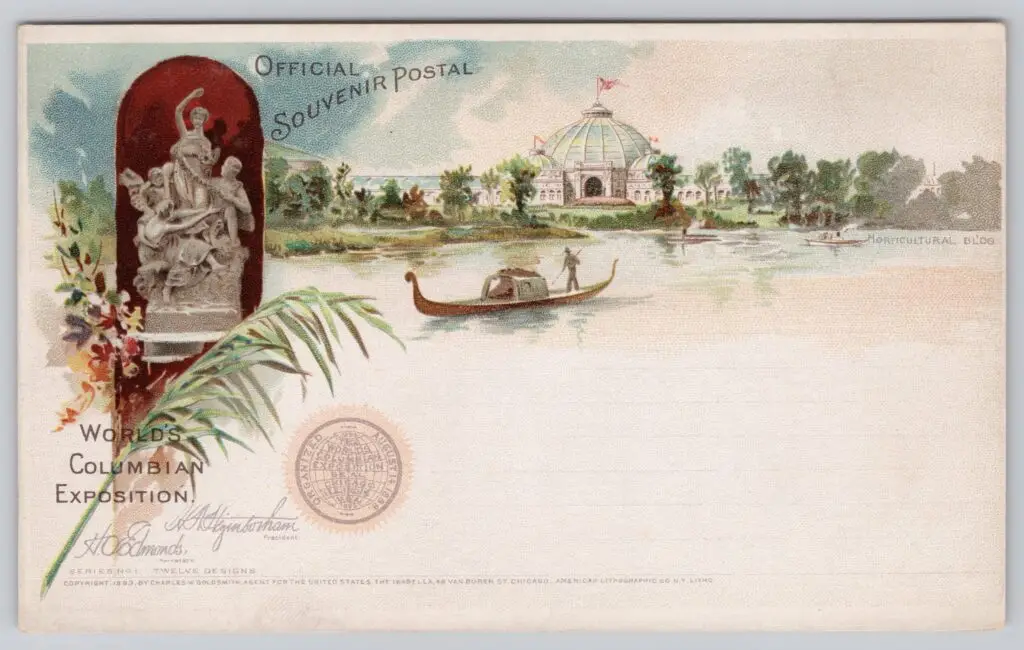
To visit the World’s Columbian Exposition in 1893 in Chicago was to immerse oneself in the future of American technology, architecture, consumer products, and entertainment. The exposition famously introduced so many aspects of American culture – ranging from the Ferris Wheel and the zipper, to Juicy Fruit gum.
With all the glitz and excitement of these displays, a visitor to Jackson Park – having just witnessed their first view of full scale electric lighting, or a demo of Josephine Cochrane’s automatic dishwasher – likely didn’t give much thought to the significance of the the card-dispensing vending machines beyond it being a nifty souvenir to take back home. However, these cards established the foundation for the American public’s almost 130 year love of sending and collecting postcards.
Of course, the idea of a mailable card sans envelope was not a completely new concept in 1893. Congress had legalized privately printed mailable cards in 1861, and twelve years later, the US government debuted its own postal card. They were very popular administratively, but were purely functional – they had no image on them.
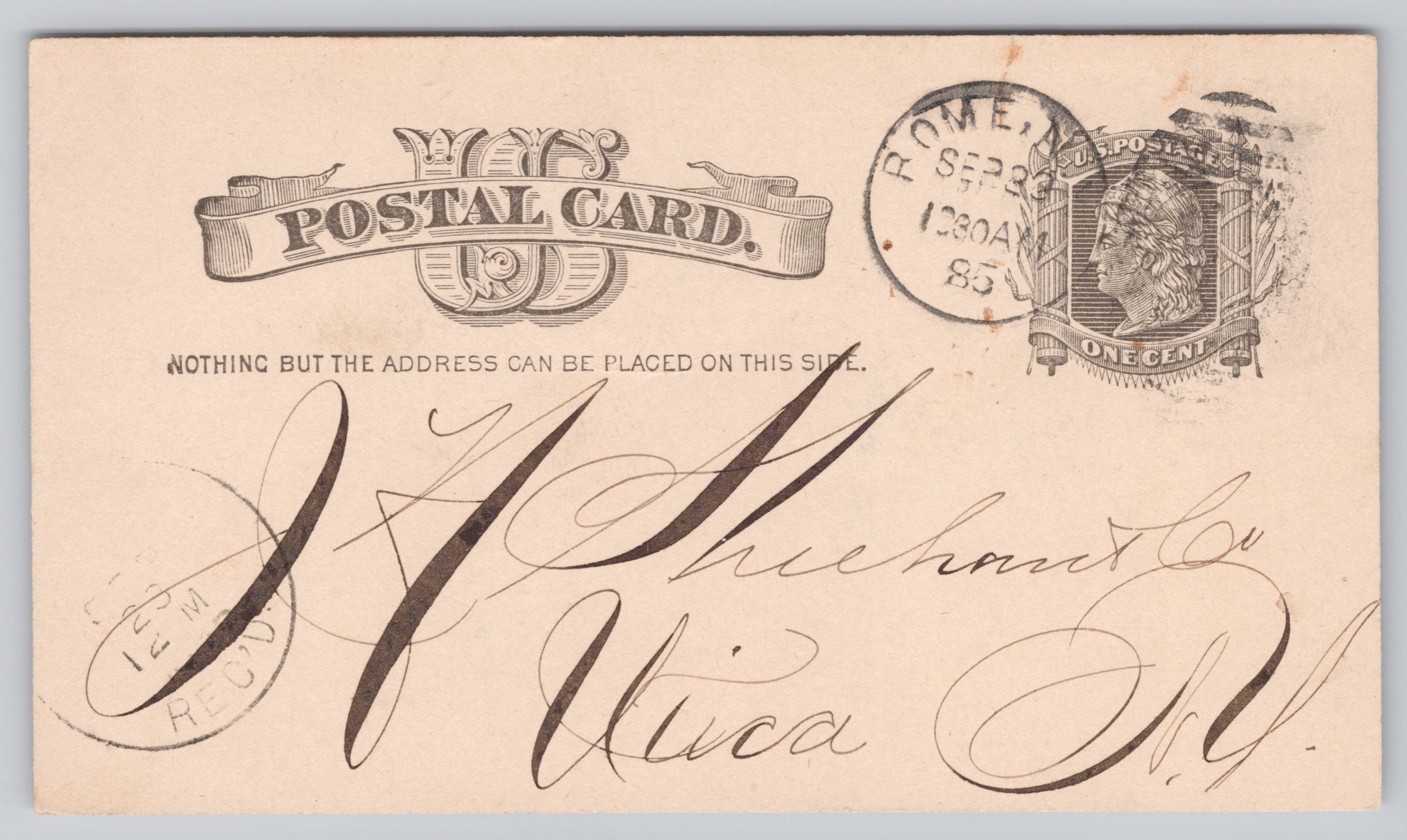
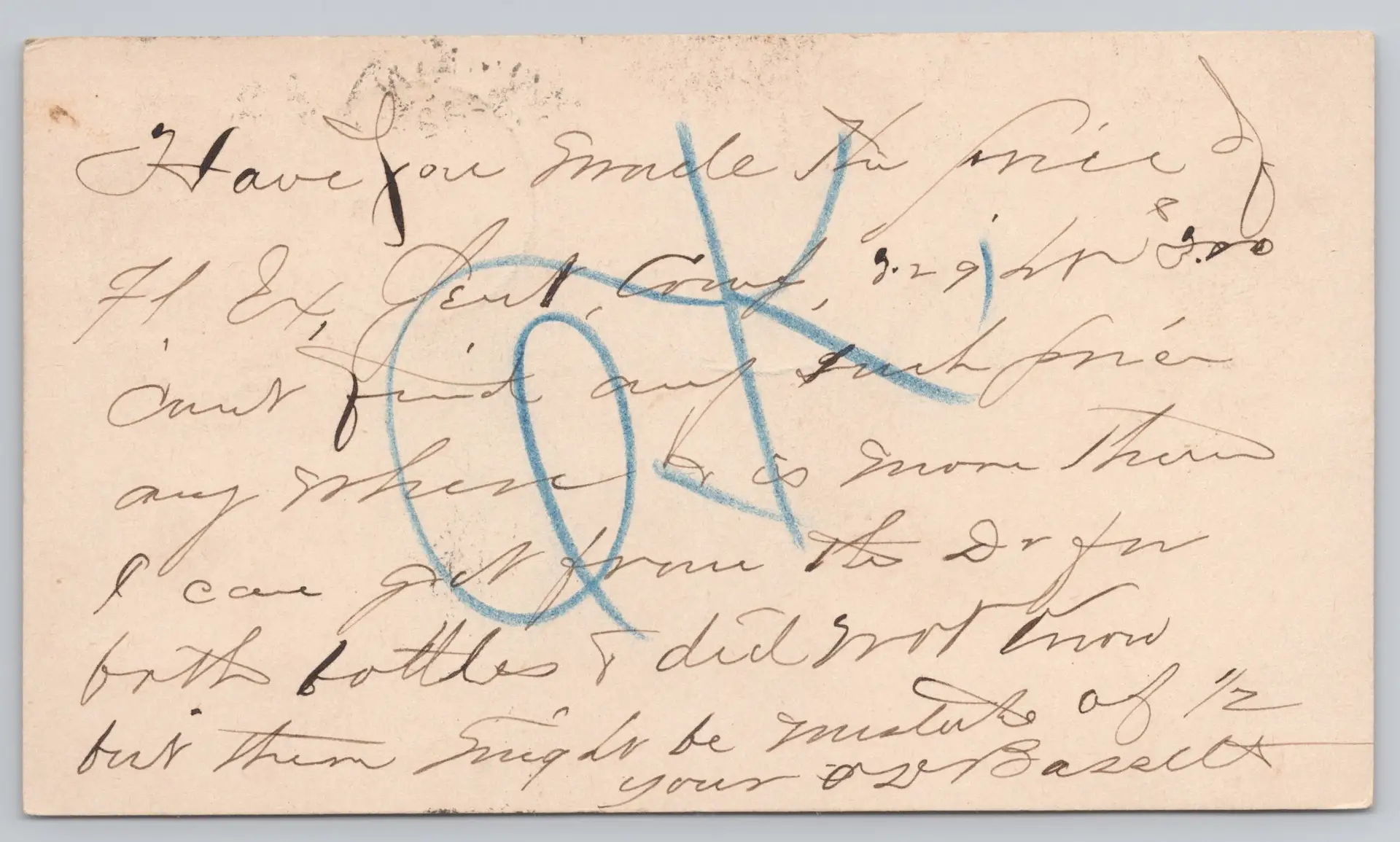
Charles Goldsmith arrived in Chicago in 1891 determined to make his mark, and (a lot of money) for himself and the American Lithographic Company. Many different printing companies had patented different versions of a souvenir mailing card, and Goldsmith had arrived to bid for exclusive concession for the exposition. He won 9 days before the expo opened in 1893, by proposing full color, multi-image printing for the exposition’s souvenir cards, which impressed fair organizers.
A few aspects of Goldsmith’s cards made them unique for postal cards at the time. They were the first souvenir postal cards to have the government’s one-cent mailing rate baked directly into their purchase price, since Goldsmith printed his designs onto pre-stamped government postal card blanks rather than plain card stock. That mattered because most souvenir cards being printed at the time couldn’t legally call themselves a “postal card” at all. The term was reserved for government issues, and a card built from scratch on ordinary paper stock got hit with the full two-cent letter rate. (Curiously, Goldsmith’s most direct rival, the so-called “Koehler cards,” sidestepped this entirely, since they were also printed on the very same one-cent government blanks he used, just without his exclusive contract or the fair’s official seal.)
Goldsmith’s cards, which were distributed by vending machines created by the Envelope and Stamp Machine Company of Chicago, cost 5 cents for two postal cards – postage included. In 2026 dollars, that’s roughly $1.85, cheap enough that a fairgoer barely had to think about it before feeding a coin into the slot.
The exposition ended up being the perfect subject to propel the usage of souvenir mailing cards into the mainstream. The White City, as it was known due to the startling, all white, Beaux-Arts buildings, was a subject mired both fantasy and reality – a mark of wonder that made visitors want to share with friends and family that they had visited this place of spectacle (or take home a cheap souvenir for their own memories)..
The cards were a massive success. Fair records show Goldsmith sold $46,450 worth of cards on the grounds alone – nearly 1.86 million cards – with total print runs estimated at close to two million once sales made off the fairgrounds are factored in. Publishers elsewhere took notice fast. Within a year or two, cities and vacation resorts across the country had their own view-cards on the market, most of them chasing the same trick of stamping images onto actual postal blanks to dodge the extra postage. Collectors now call this window of May 1893 through May 1898 the Pioneer Era, and its physical constraints shaped what an early postcard even looked like: the entire reverse was reserved for the address, so any note had to be squeezed onto the front, wedged around the image itself.
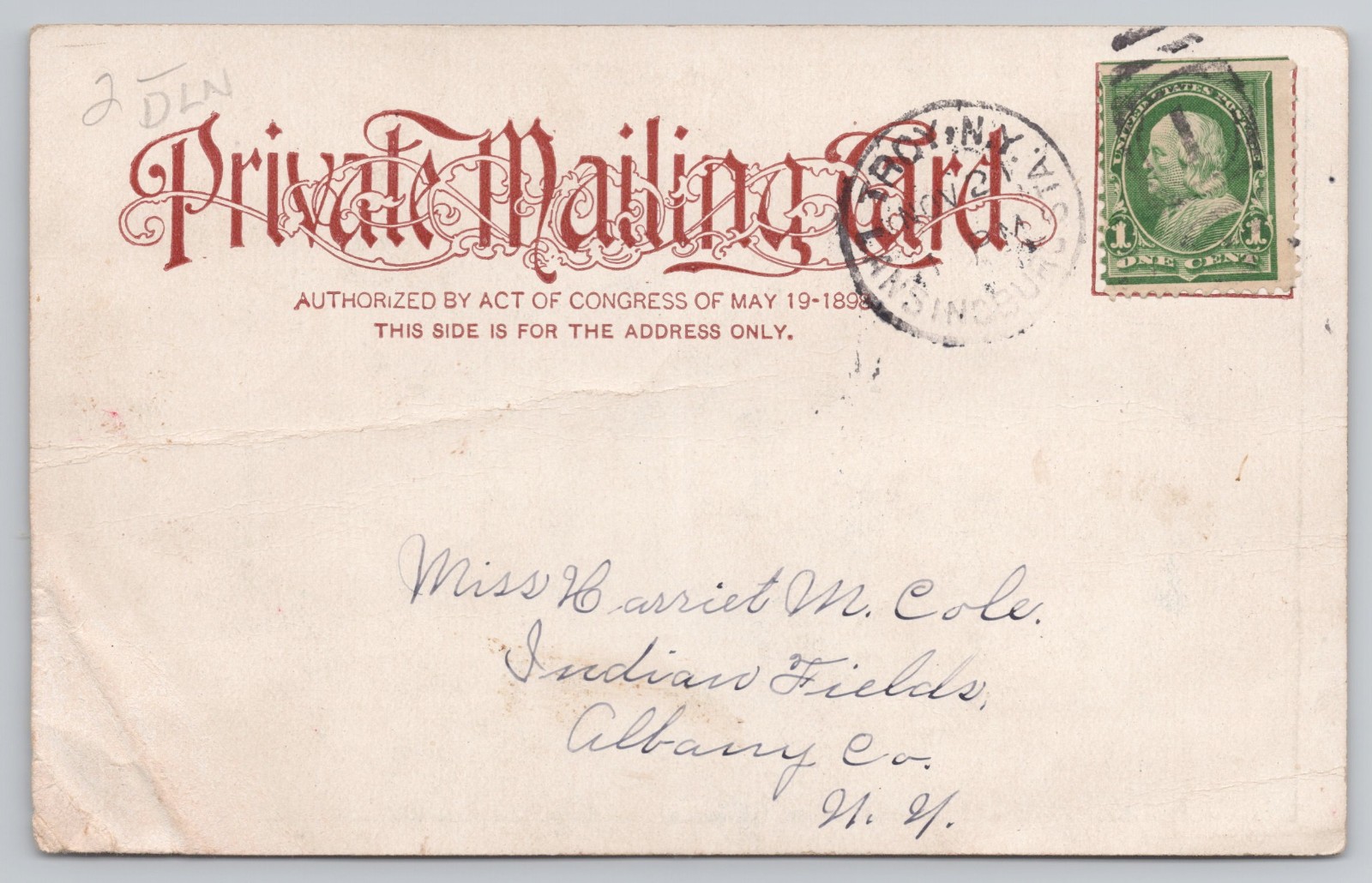
The postage advantage that had made cards like Goldsmith’s so competitive, disappeared on May 19, 1898, when Congress passed the Private Mailing Card Act. For the first time, privately printed cards could be mailed at the same one-cent rate as government postals, no workaround required, though for a few more years they still had to carry a disclaimer on the back reading “Private Mailing Card, Authorized by Act of Congress of May 19, 1898,” a requirement that wasn’t dropped until December 1901.
Goldsmith made his money and mostly disappeared from the record after that. The vending machines got sold off or scrapped. The buildings themselves were designed to be ephemeral – and lasted even shorter than intended, after a fire in 1894 that burned down the whole White City. What persisted after the exposition was the ideas and inventions presented there, along with millions of the postcards themselves. They’re still in circulation among collectors today, having quietly grown into the third-most common collecting hobby in the United States.